
Maths
Units of measurement
Time and money
Choosing the unit that fits for length, mass, capacity and time, and converting with whole numbers and decimals.
3 levels5 activities
With a subscriptionFree sample
This browser is too old for Teach.cy, and the exercises will not work properly. It needs at least iPadOS or iOS 16.4, Chrome or Edge 117, Firefox 121 or Safari 16.4. Update the device or open Teach.cy on another one. Supported devices
Skip to content
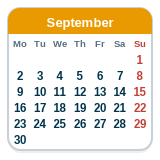
Reading a calendar: days and months in order, yesterday and tomorrow, and the seasons.
This set in Greek: Διαβάζω το ημερολόγιο
With a subscription you have access to every set, from €12.90/month.
See the subscription Try it freeCards to print: a sampleThe child puts days and months in order, finds what day it was yesterday or will be in three days, sorts months and holidays into the seasons and reads a calendar page: what day a date is, which date is the first Monday, how many Sundays the month has.
The child knows the names of the days and counts to 31. Level 1 sorts six months into winter and summer; months in order come in at level 2 and counting days on the calendar at level 3. The child answers by tapping and dragging; the voice says the days and months. The set also suits older children.
Put in order · 45 cards · Checked automatically
The child: puts in order (tap or drag)
Choose the answer · 101 cards · Checked automatically
The child: taps the answer
Choose the answer · 264 cards · Checked automatically
The child: taps the answer
Sorting · 75 cards · Checked automatically
The child: puts into groups (tap or drag)
Four days in order, yesterday and tomorrow, what day a date is, and winter and summer months.
Four months or five days in order, the day after tomorrow and the day before yesterday, the four seasons and the first Monday or other day of the month.
Five or six days or months in order, three days or a week away, the month before and after, holidays and times of the year, the last day of the month and how many Sundays or Fridays it has.
Choose where to start (the level or part that suits the child), give an example first and leave the child time to answer. Help as much as needed. Keep notes on what you notice, without reading the result as a diagnosis.
With a subscription you print every card or save them as a PDF. A sample prints free, without an account.
Cards to print: a sampleTime and money
Choosing the unit that fits for length, mass, capacity and time, and converting with whole numbers and decimals.
Time and money
Showing a time on an analogue clock by turning the hands, from o’clock to five-minute times, and finding when something ends.
Patterns and number relationships
Recognising and continuing repeating and growing patterns of symbols, colours, pictures and numbers, and spotting the piece that breaks a pattern.